Gibeon
Gibeon
Fe-Ni Properties
- Category
- Meteorite
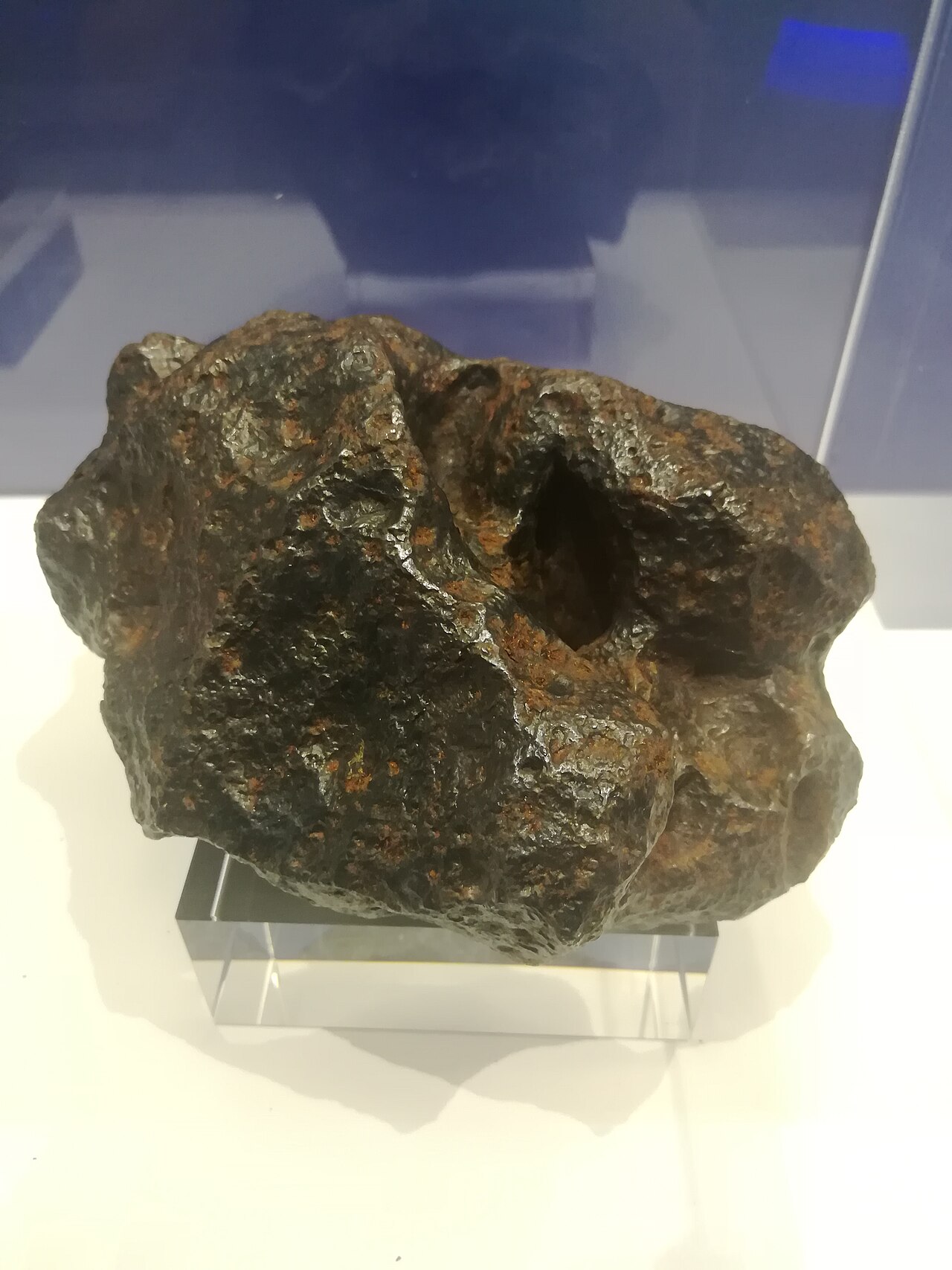
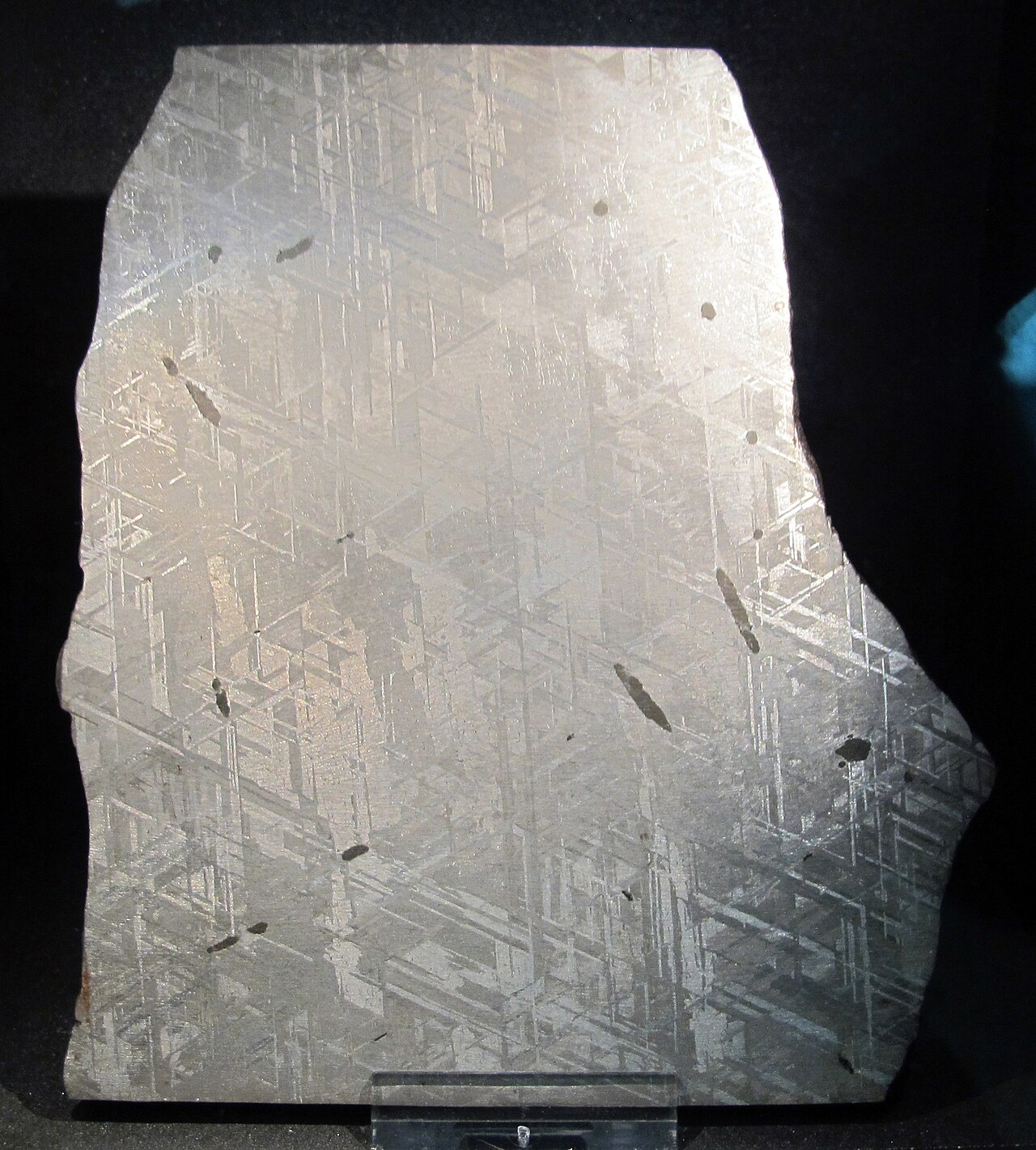
Gibeon is an iron meteorite (siderite) that fell in Namibia approximately 80,000 years ago, composed primarily of a natural alloy of iron and nickel that forms characteristic geometric patterns when polished and etched with acid.
Gibeon represents one of the most fascinating and studied iron meteorites in the history of gemology and mineralogy. Having fallen in the eponymous region of Namibia during the Pleistocene, this siderite is renowned for its Widmanstätten structure: an extraordinary crystalline pattern that emerges when the surface is polished and treated with diluted nitric acid. This geometric design reflects the slow crystallization of iron and nickel in the core of a primordial planet, which occurred under extremely slow cooling conditions (a few degrees per million years) in deep space.
Gibeon's composition is dominated by two metallic phases: kamacite (iron-nickel with low Ni content, approximately 5-10%) and taenite (iron-nickel with high Ni content, up to 30-35%). The alternation of these layers creates the celebrated broad-band structure, visible only after metallographic preparation. The meteorite has been classified as an octahedrite (group IIAB according to modern classification), meaning that the Widmanstätten bands have an average thickness between 1.3 and 3.2 mm. In addition to iron and nickel, Gibeon contains traces of cobalt, phosphorus (in the form of schreibersite), and other siderophile elements. From a gemological perspective, Gibeon is highly sought after by collectors for the beauty of its pattern and its cosmic significance: each fragment is a piece of planetary history.
Gibeon is an iron meteorite octahedrite belonging to the IIAB group (according to the modern chemical classification of Wasson and Kallemeyn). The average chemical composition is Fe-Ni with approximately 8-12 wt% nickel, 0.5-1% cobalt, traces of phosphorus (schreibersite, Fe₃P), and sulfur (troilite, FeS). The crystal structure is cubic, with kamacite (space group Fm3m, bcc structure) and taenite (space group Fm3m, fcc structure) phases alternating in lamellae parallel to the (111) planes of the cube. The average width of Widmanstätten bands is approximately 1.5-2.0 mm, characteristic of the IIAB group. Hardness is 4-5 Mohs, lower than that of pure steel due to the brittleness of the stratified crystal structure. Density is approximately 7.8-8.0 g/cm³. Isotopic analysis of iron and nickel, together with trace element composition, supports an origin from a differentiated parent body (asteroid or planetary core) that underwent melting and fractional crystallization. Radiometric dating (Pb-Pb, Ar-Ar) places primary crystallization at approximately 4.5 billion years ago, with the fall event on Earth estimated at 80,000 ± 10,000 years ago based on cosmogenic trace analysis (cosmogenic isotopes such as ¹⁰Be and ²⁶Al). Metallographic preparation involves progressive grinding (120-2000 grit), polishing with diamond paste, and etching with diluted nitric acid (HNO₃ 4-8%) for 10-30 seconds, which selectively attacks kamacite, leaving taenite in relief and revealing the Widmanstätten pattern.
Mining localities
- Gibeon, Hardap, Namibia
- Windhoek, Namibia
- Regione del deserto del Kalahari, Namibia
Frequently Asked Questions
How can I identify an authentic Gibeon meteorite?
Authentic Gibeon displays the characteristic Widmanstätten pattern, visible only after polishing and acid etching, with geometric herringbone structures formed by the Fe-Ni alloy. It is extremely heavy relative to its size, with a density around 8 g/cm³, and shows magnetic properties due to high iron concentration. Certified Namibian origin and an authenticity certificate are essential to exclude counterfeits.
What is the price range for Gibeon meteorite pieces?
Gibeon prices vary significantly based on size and polishing quality, generally ranging from €50 for small fragments to several thousand euros for substantial specimens. Pieces with particularly well-defined Widmanstätten patterns or original shapes tend to command higher prices. Purchasing from certified dealers ensures authenticity but involves higher prices compared to unregulated markets.
What is the chemical composition of Gibeon meteorite?
Gibeon is a natural Fe-Ni alloy with an approximate composition of 91% iron, 8.5% nickel, and traces of other elements such as cobalt and phosphorus. This composition classifies it as a siderite (iron) meteorite, distinguishing it from chondritic meteorites containing silicates. The Fe-Ni alloy formed in the nucleus of a proto-planet during the first millions of years of the solar system.
When did the Gibeon meteorite fall and where does it come from?
Gibeon fell in Namibia approximately 80,000 years ago, though scientific discovery and study of fragments occurred only in the 19th century in the Grand West region. It is believed to originate from the nucleus of a proto-planet destroyed during solar system formation, remaining in space until its impact on Earth. Recovered fragments are scattered over a considerable geographic area, suggesting an explosion during atmospheric entry.
Entry generated with Claude API (Anthropic) on data extracted from Mindat, RRUFF and Wikipedia. Not yet reviewed by a human expert. Verify data against original sources before citing in formal work.