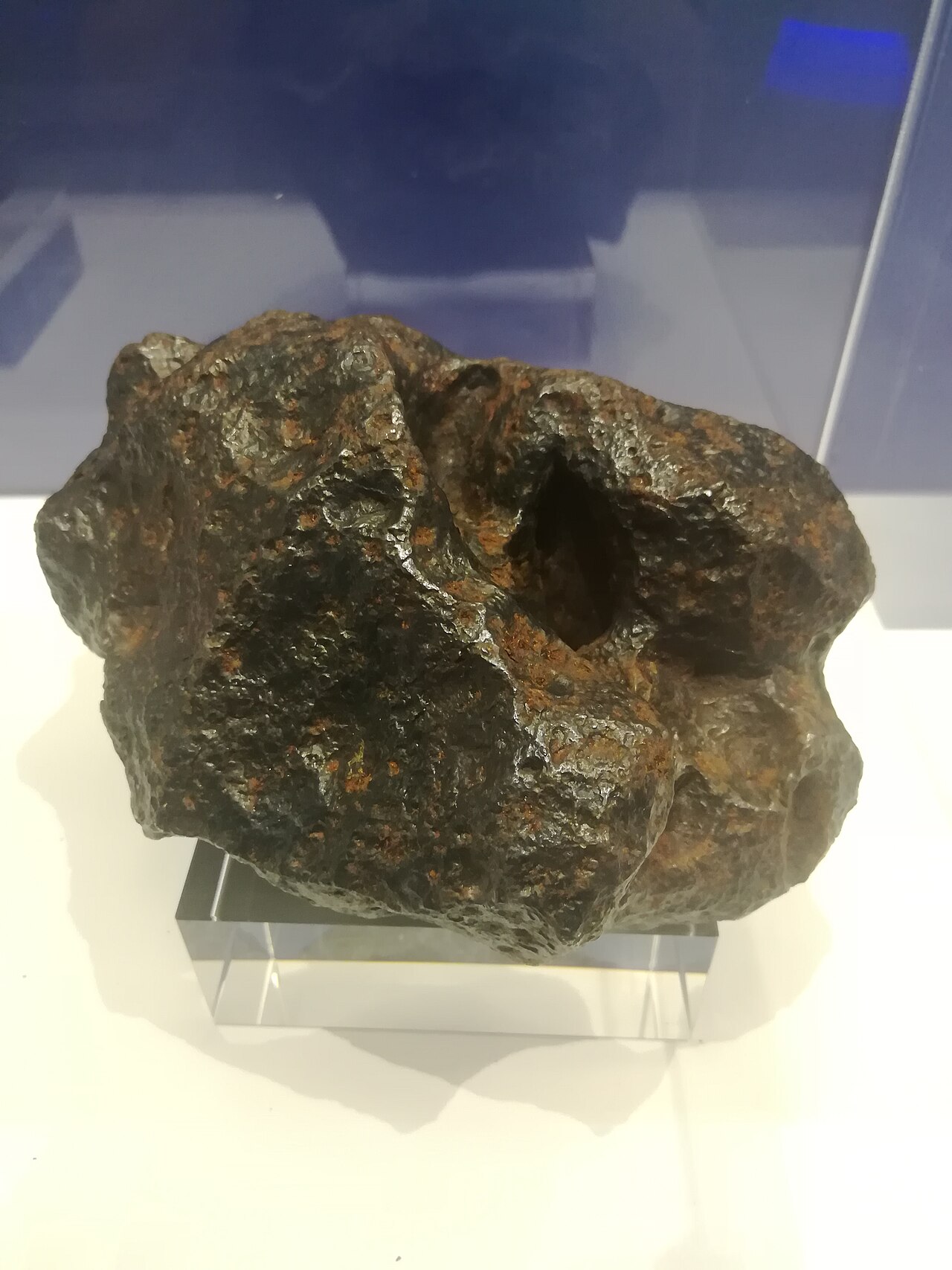
Campo del Cielo
Campo del Cielo
Fe-Ni Properties
- Category
- Meteorite
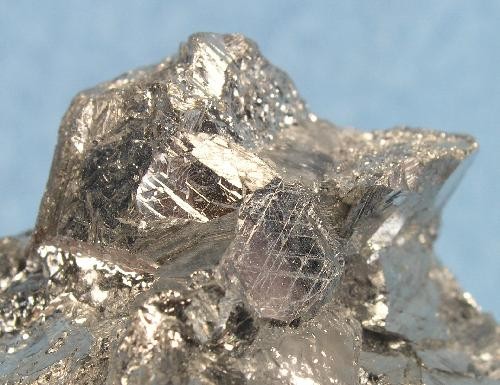
Campo del Cielo is an iron meteorite that fell in Argentina approximately 4,600 years ago, composed primarily of a natural alloy of iron and nickel that forms characteristic cubic crystals visible in polished section, known as one of the largest meteorite strewn fields ever recovered on Earth.
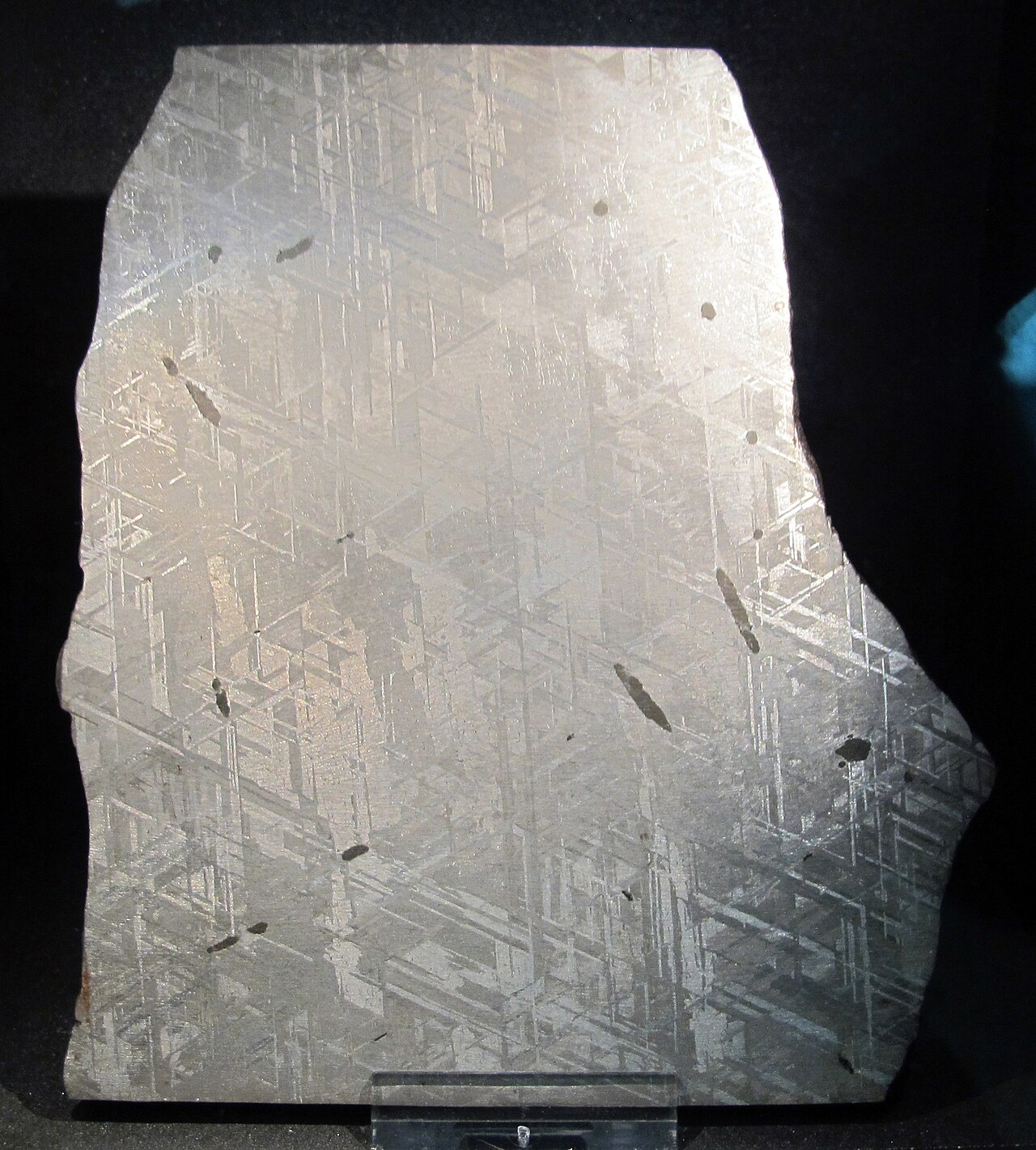
Campo del Cielo represents one of the most significant meteoritic events in recent geological history. The impact, which occurred in Chaco Province, Argentina, generated a vast dispersal field containing thousands of iron fragments, the largest of which weighs approximately 37 tonnes (Gancedo meteorite). The composition is characteristic of siderite (or iron meteorite) type meteorites, dominated by an Fe-Ni alloy with nickel percentages ranging between approximately 5 and 35%. The crystalline structure reveals Widmanstätten patterns, namely lamellar bands of kamacite (Fe-Ni with low Ni content) and taenite (Ni-rich Fe-Ni) that form during extremely slow cooling in the asteroidal mantle.
From a collecting standpoint, Campo del Cielo fragments are among the most accessible and sought-after iron meteorites worldwide. Their relative abundance, combined with the beauty of Widmanstätten figures after polishing and acid etching, makes them ideal for museums, private collections, and academic research. Radiometric dating places the fall event around 2737 BCE, although more recent estimates suggest a broader timeframe. The discovery site continues to be the subject of archaeological and geological investigations, as traces of the impact remain visible in the landscape.
Classification: Siderite (iron meteorite), subclass octahedrite based on Widmanstätten band widths (typically 0.5–2 mm). Approximate chemical composition: Fe 90–95%, Ni 5–10%, Co 0.5–1%, traces of P, S. Crystal structure: cubic, space group Im3m, lattice parameter a ≈ 2.87 Å. Density: 7.3–7.9 g/cm³. Mohs hardness: 4–5 (due to malleable Fe-Ni composition). Magnetic properties: ferromagnetic, with saturation magnetization around 220 A·m²/kg. Microstructure: constituted of kamacite phases (cubic, a ≈ 2.87 Å, Ni 5–8%) and taenite (face-centered cubic, a ≈ 3.58 Å, Ni 25–35%), with possible plessite (fine intergrowth of kamacite and taenite) in interstitial regions. Iron isotopic analysis indicates origin from a differentiated parent body in the primordial solar system. Radiometric age (Pb-Pb, Ar-Ar): approximately 4.56 Ga for crystallization in the parent body; fall age estimated around 4,700 years ago via cosmogenic dating (cosmic ray-produced radionuclides: ¹⁰Be, ²⁶Al). Polished section etched with dilute nitric acid (2–5%) reveals characteristic Widmanstätten pattern with well-defined parallel bands.
Mining localities
- Chaco, Argentina
- Provincia di Chaco, Argentina
- Pampas, Argentina
Frequently Asked Questions
How much does a Campo del Cielo meteorite cost?
The price of a Campo del Cielo meteorite varies considerably depending on size and polish quality: small fragments (5-10 grams) cost €20-50, while larger specimens over 100 grams can reach €200-500. Prices increase significantly for samples with perfectly visible crystallography (Widmanstätten patterns) and authenticity certificates.
How do you recognize Widmanstätten patterns in Campo del Cielo?
Widmanstätten patterns are characteristic geometric cubic designs that appear when a meteorite section is polished and etched with dilute nitric acid. These patterns form from the natural Fe-Ni alloy (iron-nickel) that crystallized slowly in space, creating intersecting parallel lines at 90-degree angles visible to the naked eye.
Where was the Campo del Cielo meteorite found and when did it fall?
The Campo del Cielo meteorite fell in Chaco Province, Argentina approximately 4,600 years ago, forming one of the largest meteorite strewn fields ever recovered on Earth with hundreds of fragments scattered over an area of about 60 square kilometers. Modern discovery dates to the 18th century when locals began reporting strange heavy metal objects in the ground.
What is the chemical composition of Campo del Cielo?
Campo del Cielo is composed primarily of a natural iron-nickel alloy (Fe-Ni), classified as an octahedrite iron meteorite, with nickel content between 7-12% and traces of cobalt and other siderophile elements. This rare composition on Earth formed in the core of a primordial asteroid and reveals the internal structure of rocky planets.
Entry generated with Claude API (Anthropic) on data extracted from Mindat, RRUFF and Wikipedia. Not yet reviewed by a human expert. Verify data against original sources before citing in formal work.