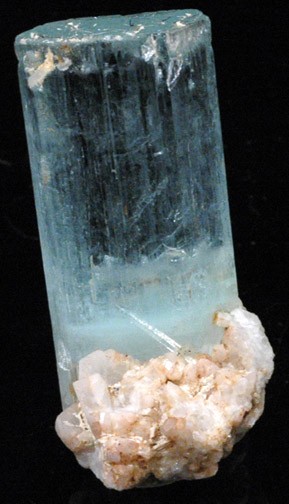
Aquamarine
Acquamarina
Be₃Al₂Si₆O₁₈ Properties
- Color
- Blue, blue-green, light blue
- Luster
- Vitreous
- Density
- 2.68–2.74 g/cm³
- Category
- Gem
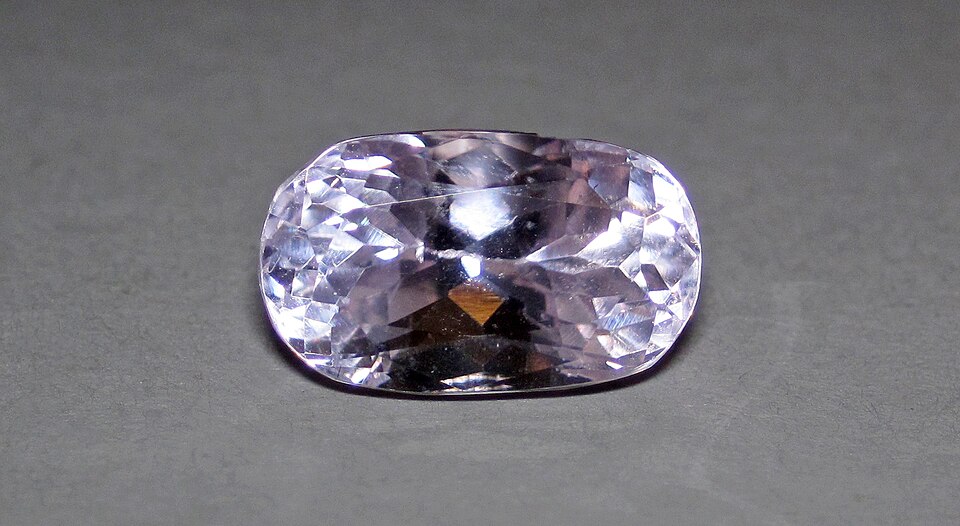
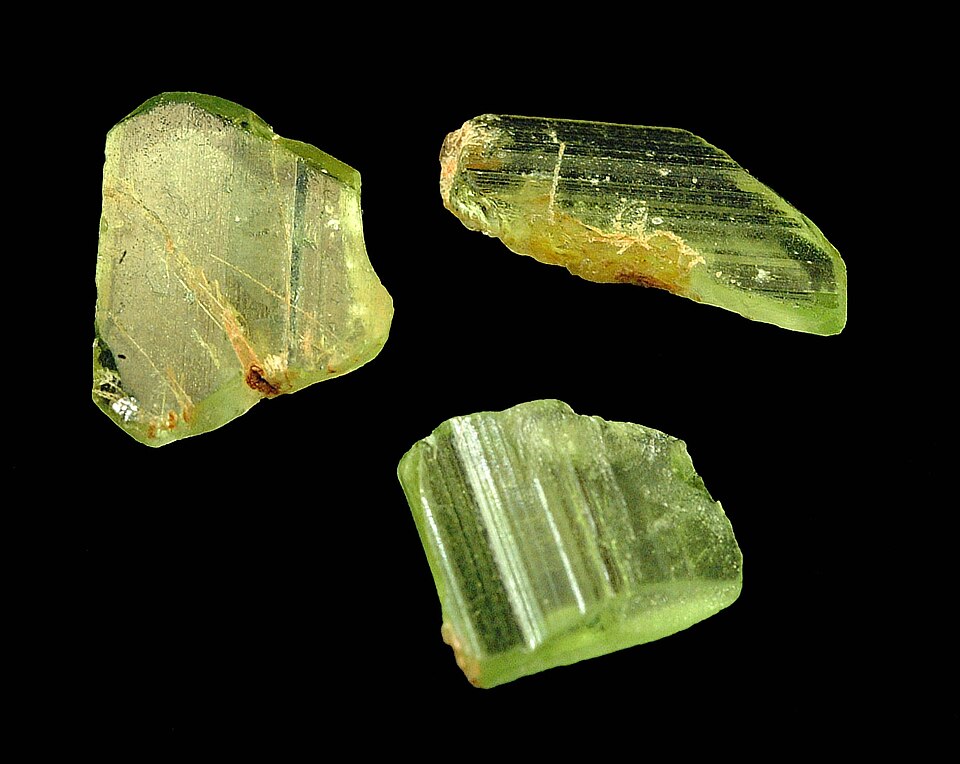
Aquamarine is a variety of beryl with a sky-blue color that evokes seawater, from which it derives its name. It is the most common beryl gemstone after emerald and is valued for its exceptional transparency and large crystals.
The blue color derives from the presence of ferrous iron (Fe²⁺) in the crystal lattice. Heat treatment at 400°C transforms ferrous iron into ferric iron, eliminating greenish tones and producing a purer blue — standard practice in the gem trade.
The largest aquamarine ever found is the "Marta Rocha" from Brazil: 110 kg of rough crystal, from which over 300,000 carats of finished gemstones were obtained.
Belongs to the beryl group, the same mineral as emerald. Hexagonal system, space group P6/mcc. The refractive index is 1.567–1.590, birefringence 0.005–0.009. Unlike emerald, aquamarine typically has very few inclusions and high clarity. Absorption spectrum with band at 427 nm (Fe²⁺).
Mining localities
- Minas Gerais, Brasile (principale produttore)
- Pakistan (Gilgit-Baltistan)
- Madagascar
- Nigeria
- Mozambico
Frequently Asked Questions
What is the difference between aquamarine and emerald?
Both are varieties of beryl (Be₃Al₂Si₆O₁₈), but they differ in color and trace elements: aquamarine is blue due to iron presence, while emerald is green thanks to chromium and vanadium. Aquamarine is generally more transparent and pure than emerald, which more often contains visible inclusions.
How to recognize genuine aquamarine from fake?
Authentic aquamarine has a hardness of 7.5-8 on the Mohs scale, shows birefringence under microscopic observation, and displays blue-violet fluorescence under ultraviolet light. Common imitations like glass or hydrothermal synthetics lack these optical properties and are much more fragile.
What is the average price of aquamarine and where to find it?
Gem-quality aquamarine costs on average 50-300 euros per carat, with variations based on transparency and origin; the best deposits are found in Brazil, Madagascar, and Pakistan. It is available through specialized jewelers, mineral shops, and online platforms dedicated to certified gemstones.
How does aquamarine form in nature?
Aquamarine forms in the final stages of granitic magma crystallization, when beryllium-rich fluids recrystallize in cavities (pegmatites) at temperatures around 500-300°C. The blue color develops over time through natural radiation in rocks, which transforms iron ions present in the crystal structure.
Entry generated with Claude API (Anthropic) on data extracted from Mindat, RRUFF and Wikipedia. Not yet reviewed by a human expert. Verify data against original sources before citing in formal work.