Lepidolite
Lepidolite
K(Li,Al)₃(Si,Al)₄O₁₀(OH,F)₂ Properties
- Category
- Mineral
Lepidolite is a lithium and potassium silicate that crystallizes in the monoclinic system, characterized by very low hardness (2.5–3 on the Mohs scale) and perfect cleavage that produces thin and flexible lamellae. It is the primary industrial source of lithium for batteries and technological applications.
Scientific note: "Lepidolite" is technically a compositional field between two distinct minerals — trilithionite (pale lilac) and polylithionite (deeper purple) — which are the end members of the series. "Lepidolite" is widely accepted in popular use, but scientifically it refers to a series name rather than a single mineral species.
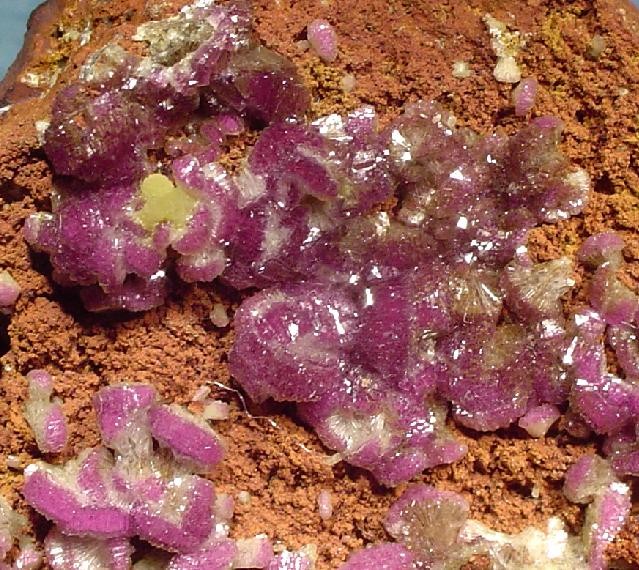
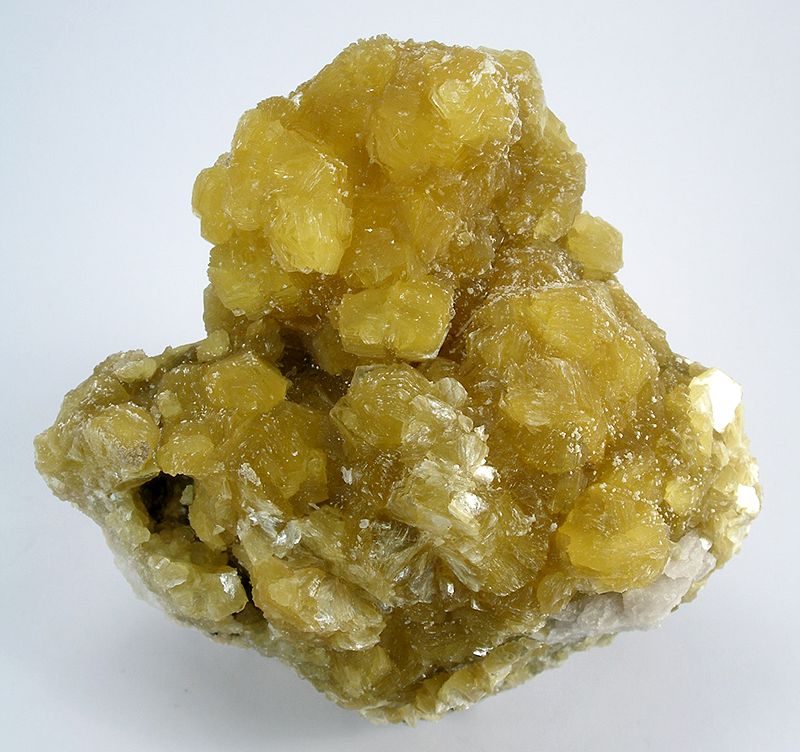
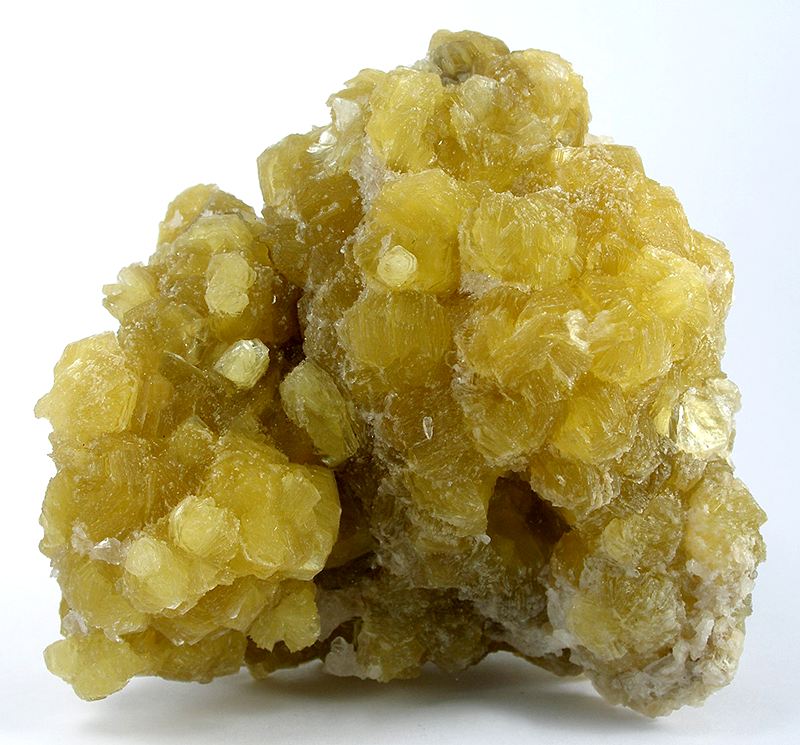
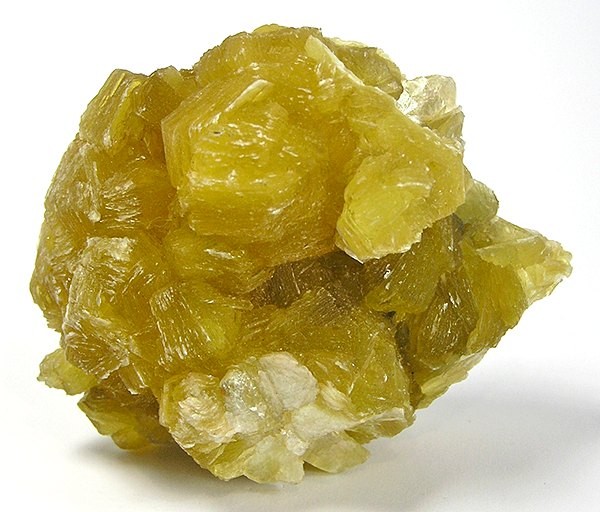
Lepidolite belongs to the group of lithium-bearing micas and is one of the most important minerals for lithium extraction worldwide. Its structural formula reveals a complex superposition of layers of silicon-aluminum tetrahedra and lithium-aluminum octahedra, bonded together by potassium ions. This atomic arrangement explains the characteristic perfect cleavage along the (001) plane, which enables separation into very thin and slightly flexible sheets. Color ranges from pale pink to violet, white, and yellow, often with the vitreous-pearlescent luster typical of micas.
It forms predominantly in lithium-rich granitic pegmatites, often in association with other lithium-bearing minerals such as spodumene, petalite, and tourmaline. Pegmatites are igneous rocks with very coarse grain size that crystallize slowly from magmas rich in incompatible elements. Lepidolite represents a late crystallization stage, when lithium becomes concentrated in residual fluids. From a gemological perspective, lepidolite is not used in jewelry, but its economic value lies in its lithium content: a single ton of ore can contain 1–2% Li₂O. Significant deposits are found in Australia (Greenbushes), Brazil, Czech Republic, and Zimbabwe, with global production dominated by large-scale operations dedicated to lithium extraction for lithium-ion batteries.
Crystal system: Monoclinic, space group C2/m. Typical lattice parameters: a ≈ 5.3 Å, b ≈ 9.2 Å, c ≈ 10.3 Å, β ≈ 100.8°. Hardness: 2.5–3 Mohs. Density: 2.8–3.0 g/cm³ (varies with lithium and iron content). Perfect cleavage along (001), characteristic of micas. Refractive index: nα ≈ 1.525, nγ ≈ 1.548 (birefringence ≈ 0.023). Pleochroism: weak to moderate, with chromatic variations depending on orientation. IR Spectroscopy: characteristic O-H stretching bands around 3600–3700 cm⁻¹ and Si-O-Si absorptions in the 900–1200 cm⁻¹ region. Chemical analysis: Li₂O content ranges from 3.5% to 8% by weight; K₂O content is typically 8–10%. Composition may include traces of Rb, Cs, Fe, and Mn. UV Fluorescence: generally inert, although some specimens may exhibit weak red fluorescence under 254 nm UV. Common mineral associations: spodumene, petalite, alkali feldspar, quartz, lithium-bearing tourmaline, beryl. Geological setting: zonal pegmatites of LCT type (Lithium-Cesium-Tantalum), often in the intermediate to distal zone of pegmatites.
Mining localities
- Greenbushes, Western Australia, Australia
- Araçuaí, Minas Gerais, Brasile
- Bohemia, Repubblica Ceca
- Zimbabwe, Africa meridionale
- Svezia, Scandinavia
- Namibia, Africa meridionale
- Spagna (Pegmatiti del Massico Iberico)
- Canada (Manitoba, Ontario)
Frequently Asked Questions
Why is lepidolite important for batteries?
Lepidolite is the primary industrial source of lithium, an essential element for rechargeable batteries in smartphones, electric vehicles, and portable devices. It typically contains 3-4% lithium by weight and is processed through melting and crystallization to obtain high-purity lithium carbonate or hydroxide.
How can you identify lepidolite from similar minerals?
Lepidolite is recognized by its purple, pink, or white color, very low hardness (2.5-3 on the Mohs scale), and especially by its perfect cleavage that produces thin and flexible lamellae. It leaves a colorless or weakly colored streak on ceramic, and has a specific gravity around 2.8-3.0.
In which rocks is lepidolite found?
Lepidolite forms primarily in lithium-rich granitic pegmatites, often associated with feldspars, quartz, and mica. It crystallizes in the monoclinic system during late cooling of potassium and lithium-rich magmas, and is frequently found in economically important pegmatite deposits such as those in Australia, Chile, and Zimbabwe.
What is the exact chemical formula of lepidolite?
The chemical formula of lepidolite is K(Li,Al)₃(Si,Al)₄O₁₀(OH,F)₂, where potassium is fixed while lithium and aluminum vary in proportion, as do hydroxyl and fluorine. This variable composition makes lepidolite technically a mineral belonging to the mica group, with a layered silicate structure.
Entry reviewed by a mineralogist or gemologist. Key data has been verified against primary sources. Minor inaccuracies may remain in secondary data.