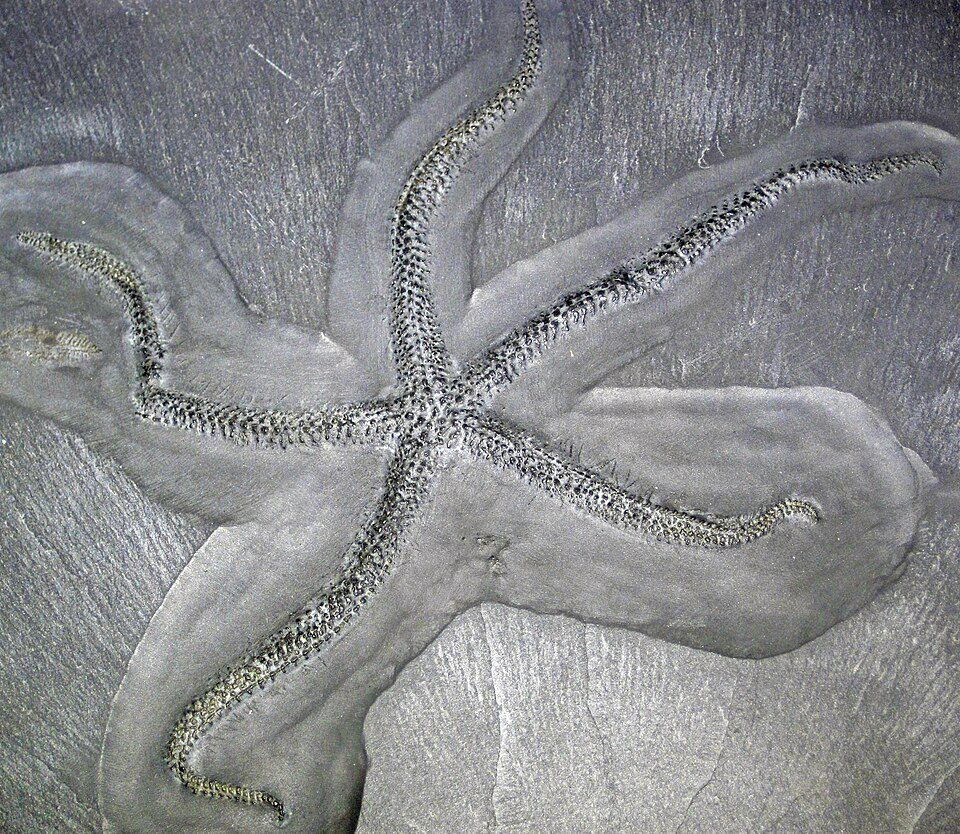
Trilobite
Trilobite
CaCO₃ Properties
- Category
- Fossil
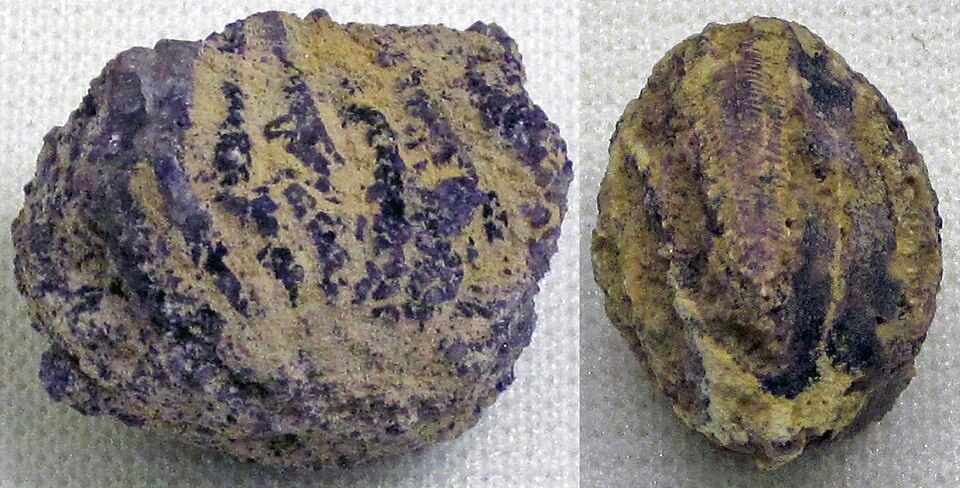
The trilobite is a fossil of an ancient extinct marine arthropod whose exoskeleton is composed primarily of calcite (CaCO₃) and mineralized chitin. These creatures dominated the Paleozoic oceans for over 270 million years before disappearing in the great Permian-Triassic extinction event, approximately 252 million years ago.
Trilobites represent one of paleontology's most fascinating chapters. These marine arthropods, characterized by their distinctive trilobate body division (from which their name derives), first appeared in the Lower Ordovician and became completely extinct at the end of the Permian. Their exoskeleton, mineralized primarily as trigonal calcite, exhibits a hardness of 3–4 on the Mohs scale, rendering them relatively fragile yet extraordinarily well-preserved in calcareous and siliceous sediments. The carapace structure reveals sophisticated evolutionary adaptations: compound eyes (in more advanced specimens), articulated appendages, and morphology that varied enormously among approximately 20,000 cataloged species.
Fossil preservation of trilobites typically occurs in low-energy marine environments where calcium carbonate-rich sediments permit diagenesis that preserves anatomical detail. Collectors and paleontologists particularly seek specimens exhibiting enrollment (defensive coiled position), molt traces, and associations with other fossils. The most celebrated localities include Morocco (Atlas deposits), China (Cambrian-Ordovician formations), Bohemia, and North America, where trilobites have been recovered from stratigraphic sequences spanning over 300 million years of geological history.
Fossil trilobites exhibit complex primary and secondary mineralization. The original exoskeleton composition included crystalline calcite (CaCO₃, trigonal system, space group R3̄c), organic chitin, and possibly calcium phosphate in more rigid elements. During diagenesis, calcite undergoes recrystallization, often with replacement by silica (chalcedony, microcrystalline quartz) or pyrite (FeS₂) in reducing environments. Measured hardness (3–4 Mohs) reflects the mixed mineralogical composition and degree of cementation. Spectroscopic analysis via Raman and FTIR reveals characteristic calcite bands (ν₃ at ~1450 cm⁻¹, ν₁ at ~1086 cm⁻¹) and organic residues. Optical microscopy in thin section shows the lamellar carapace structure with alternating layers of calcite and organic matter. Well-preserved specimens retain ultrastructural detail: setae, spines, and articulations, analyzable via SEM (scanning electron microscopy). Radiometric dating of host sediments (K-Ar, Rb-Sr) places trilobites in stratigraphic intervals from the Lower Cambrian (ca. 521 Ma) to the Upper Permian (ca. 252 Ma).
Mining localities
- Atlante, Marocco
- Yunnan, Cina
- Boemia, Repubblica Ceca
- New York, Stati Uniti
- Manitoba, Canada
- Galles, Regno Unito
- Svizzera
- Svezia
Frequently Asked Questions
How much does an authentic trilobite fossil cost?
The price of a trilobite fossil varies greatly from 20 to 500+ euros depending on size, preservation, and species rarity. Small and fragmented trilobites are found at accessible prices (20-100 euros), while complete and well-preserved specimens can cost hundreds of euros. Rarer trilobites from celebrated locations like Morocco can command even higher prices.
How to identify a real trilobite fossil from a fake one?
An authentic trilobite fossil shows natural fossilization signs such as sediment compaction around the body and a natural mineralization patina. Forgeries often display overly perfect details, artificially uniform edges, or lack of encrusting sediment; moreover, replicas are usually made of concrete or resin with significantly lower density and weight than natural calcite (CaCO₃). Use a magnifying lens to verify the natural crystalline texture of the surface.
What are the mineralogical properties of trilobites and how did they fossilize?
The trilobite exoskeleton was composed mainly of calcite (CaCO₃) and mineralized chitin, which were preserved through diagenesis. During fossilization, the original limestone underwent recrystallization or was replaced by secondary minerals such as pyrite or silica, while still retaining the crystalline structure of calcite. This process occurs when remains are rapidly buried in anoxic marine sediments, preventing bacterial decomposition.
Where are the best trilobite fossils found and in which rock formations?
Trilobite fossils are found mainly in Paleozoic limestone and shale deposits (541-252 million years ago), with the richest deposits in Morocco (Jebel Barcha Formation), China (Chengjiang Formation), Canada (Burgess Shale), and the United States. These sites preserve trilobites in limestone (CaCO₃) or shales with exceptional quality thanks to anoxic conditions that promoted rapid mineralization and minimal compaction.
Entry generated with Claude API (Anthropic) on data extracted from Mindat, RRUFF and Wikipedia. Not yet reviewed by a human expert. Verify data against original sources before citing in formal work.