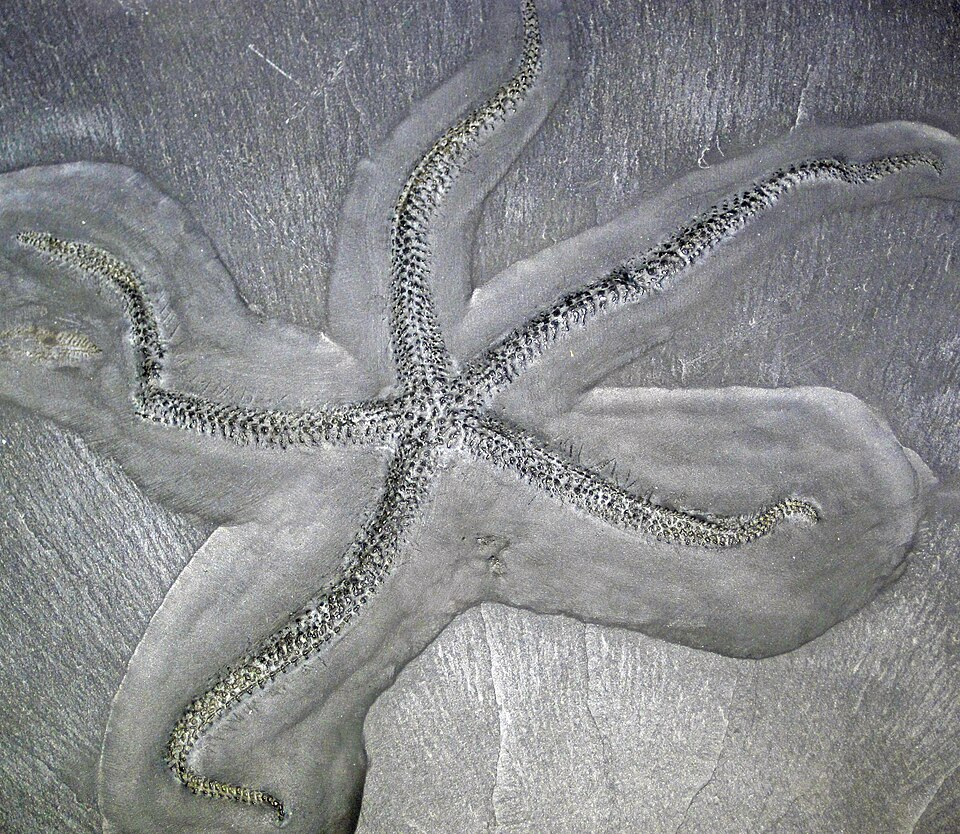
Fossil Fish
Pesce Fossile
CaCO₃ + Ca₅(PO₄)₃F Properties
- Category
- Fossil
A fossil fish is the skeleton or impression of an ancient aquatic vertebrate preserved in rock, typically through fossilization via mineralogical replacement (calcite and apatite) or sedimentary compression. These fossils represent millions of years of evolutionary history and are among the most fascinating paleontological specimens for understanding prehistoric marine life.
Fossil fish provide an extraordinary window into the history of aquatic life. Their preservation occurs primarily through two mechanisms: mineralogical replacement, where original tissues are replaced by minerals such as calcite (CaCO₃) and apatite (Ca₅(PO₄)₃F), and compression, which produces two-dimensional impressions in fine sediments. The quality of preservation depends on the rate of burial, sediment composition, and post-depositional diagenetic conditions.
The most celebrated deposits are found in ancient lacustrine and marine environments, where anoxic conditions favored exceptional preservation. Iconic examples include fish from the Solnhofen Limestone (Upper Jurassic, Germany), characterized by extraordinary anatomical detail, and fossils from the Early Cretaceous Santana Formation (Brazil). The variable hardness (3-5 on the Mohs scale) reflects the degree of mineralization and the type of sedimentary matrix. These specimens have revolutionized our understanding of vertebrate evolution and marine paleoecology.
Fossil fish represent aquatic vertebrate bodies subjected to complex taphonomy. The primary mineralogical composition is biogenic calcite (CaCO₃) derived from original shells and skeletons, integrated with francolite apatite (Ca₅(PO₄)₃F), a diagenetic mineral that replaces biological calcium phosphate (hydroxyapatite). The crystalline structure of the fossil as a whole is amorphous at the macroscopic level, although individual calcite and apatite crystals maintain well-defined crystal structures (trigonal and hexagonal, respectively).
The 3-5 Mohs hardness indicates a partially lithified sedimentary matrix or variable degrees of mineralogical cementation. Analysis via X-ray diffraction (XRD) enables identification of present mineralogical phases and degree of crystallinity. Optical microscopy in thin section reveals residual histological structures, while computed tomography (CT) permits non-destructive three-dimensional visualization. Radiometric dating (K-Ar, Ar-Ar on associated minerals) and biostratigraphy provide chronological constraints. Fossil associations (microfauna, flora, invertebrates) contextualize the depositional environment and paleoecology.
Mining localities
- Solnhofen, Baviera, Germania
- Santana, Ceará, Brasile
- Monte Bolca, Veneto, Italia
- Messel, Assia, Germania
- Green River Formation, Wyoming, Stati Uniti
- Liaoning, Cina
- Lagerstätte di Burgess Shale, British Columbia, Canada
Frequently Asked Questions
How does a fossil fish form and how long does it take?
A fossil fish forms when a skeleton is rapidly buried by sediments and undergoes fossilization through mineral replacement, where minerals like calcite (CaCO₃) and apatite (Ca₅(PO₄)₃F) replace original materials, or through sedimentary compression. This process typically takes millions of years, usually between 5 and 300 million years depending on geological conditions and burial depth.
How do you recognize a real fossil fish and where to find it?
An authentic fossil fish displays clear anatomical details such as dorsal spines, fins, and visible bone structures, with coloring that naturally integrates with the host rock. The most reliable collection sites are paleontological museums, authorized quarries, internationally recognized deposits (such as Morocco and Canada), and certified suppliers that can provide provenance documentation.
How much does a fossil fish cost and what factors influence the price?
The price of a fossil fish ranges from 20 euros for small specimens to several thousand euros for rare or exceptionally preserved fossils. The main factors are: size, skeleton completeness, geological age, species rarity, fossilization quality, and documented provenance.
What is the scientific importance of fossil fish for evolution?
Fossil fish are fundamental to understanding vertebrate evolution as they document the transition from primitive marine forms to terrestrial vertebrates, spanning over 500 million years of evolutionary history. They provide direct evidence of the origin of fins, bone skeleton, and anatomical structures that characterize all modern vertebrates, including humans.
Entry generated with Claude API (Anthropic) on data extracted from Mindat, RRUFF and Wikipedia. Not yet reviewed by a human expert. Verify data against original sources before citing in formal work.